Short answer: almost never. The brown recluse, Loxosceles reclusa, has a well-documented native variety centered on the Midwest and South, and it does not naturally occur in California's Central Valley. Validated finds in California are extremely unusual and typically connected to unexpected transport, such as a moving truck from Missouri or a delivery of stored products. Many "brown recluse" sightings here end up being other, safe brown spiders or, sometimes, a different recluse species confined to very small pockets. If you reside in Fresno, Bakersfield, Modesto, or anywhere along the Valley floor, the chances that the brown spider in your garage is a real brown recluse are extremely low.
Why the confusion persists
The brown recluse's reputation arrived long before the spider itself. People hear worrying stories, then every little brown spider becomes suspect. Add a couple of consistent myths, a handful of scary images from other states, and a medical community rightly trained to stay alert to necrotic injuries, and you have a perfect dish for overdiagnosis. In California, that overdiagnosis is well recorded. State arachnologists and insect experts have actually swabbed, collected, and determined thousands of spiders from "recluse" calls. Time after time, the types are anything but recluses: cellar spiders, sac spiders, https://reidkfig757.lucialpiazzale.com/why-are-there-ants-in-my-tidy-cooking-area-covert-factors-and-repairs false widows, orb weavers, even ground spiders that hardly draw notice.
The misidentification problem likewise emerges since the brown recluse is not a flashy spider. No inclined abdominal area patterns like a widow, no significant banding. It is, rather literally, a small brown spider that keeps to itself. People see a brown spider and dive to the most remarkable name. Memory beats morphology.
What the information in fact shows
When you remove the stories and map genuine specimens, a clear pattern emerges. Brown recluses grow from roughly Nebraska and Iowa south through Texas, and east towards Georgia and Kentucky. The West Coast is not part of that range. There have been confirmed interceptions in California, however they are unusual and generally tied to human movement. Entomologists sometimes find them in storage facilities after shipments from endemic states. Those small, isolated populations rarely persist. The Central Valley, with its hot, dry summertimes and irrigated farming matrix, is insufficient to establish a steady, replicating brown recluse population without repeated introductions.

Surveys by university collections and state agencies consistently stop working to turn up recognized nests in the Valley. Professional recognition labs serving pest control companies see a consistent stream of samples identified "brown recluse" that show to be other types. If the spider genuinely lived widely here, it would show up in those collections at far greater rates.
The brown recluse, exactly defined
A true brown recluse has a couple of reliable functions:
- Size and build: normally about a quarter to half an inch in body length, long legs, and a somewhat flattened appearance when at rest. They appear fragile, but they move with a quick, direct gait. Eye arrangement: 6 eyes arranged in 3 sets. Most typical house spiders have 8 eyes. Countable eye patterns are the closest thing to a smoking cigarettes gun for field recognition, but you need a clear, close view or a macro image under good light. Markings: a violin-shaped spot on the cephalothorax that points toward the abdominal area. This is both popular and overrated. Lots of non-recluses look "violinish" to distressed eyes, and some recluses have faint markings. The violin alone must not be your choosing factor. Webs and habits: recluses spin untidy, irregular retreat webs in dry, undisturbed areas. They hunt at night and tend to freeze or run for cover rather than square up and display.
California does have other Loxosceles types, notably the desert recluse in warm, arid zones. Even that types is not developed across the Central Valley's cities. The desert recluse tends to prefer sparsely vegetated desert environments instead of irrigated neighborhoods with rich landscaping. A few fringe locations on the Valley's eastern edge method that habitat, however even there, confirmed finds are uncommon.
What people typically see instead
Once you hang around on crawlspace assessments and attic cleanouts, you start to acknowledge the Central Valley's typical suspects:
- Cellar spiders (Pholcidae): long-legged "daddy longlegs" that construct tangled webs in corners and under eaves. They look spindly, and their bodies resemble small pearls on stilts. Safe, everywhere, and typically blamed for bites they never deliver. Yellow sac spiders (Cheiracanthium): little, pale, typically with a slightly greenish cast. They construct little silk sacs in leaves and window tracks. They can bite, and the bite can sting, but severe issues are uncommon. These are amongst the most commonly misidentified "recluses" in California homes. False widows (Steatoda): dark, rounded abdominal areas with faint patterns. They reside in protected nooks and can provide a bite if provoked. Uncomfortable, yes for some individuals, but they do not bring the lethal track record of recluses. Ground spiders (Gnaphosidae) and funnel weavers (Agelenidae): typical, quick runners throughout garage floorings and patio areas. They tend to have 8 eyes in unique rows, which dismisses recluses.
Spend a day with a seasoned exterminator in Fresno in summer and you will gather a coffee cup's worth of these types around patio light and in the edges of stacked firewood, all falsely blamed for recluse bites the night before.
About those bites
The brown recluse made its reputation due to the fact that its venom can, in a subset of cases, trigger tissue breakdown around the bite site. Even in the spider's core range, many bites produce small or moderate reactions. Serious necrosis is the outlier, not the norm. In California, the disconnect in between diagnosis and truth is bigger because the spider is not here in force. Many necrotic injuries that get the "brown recluse" label originate from other causes: bacterial infections like MRSA, pressure sores, diabetic ulcers, injury that went unnoticed, or bites from other arthropods. Physicians in the Central Valley have become more cautious about attributing unidentified sores to recluses without a recorded specimen.
From a useful viewpoint, if you wake with an uncomfortable, broadening skin lesion, treat it as a medical issue initially, not a spider problem. Look for care, get it cultured if required, and avoid anchoring on a types unless you in fact gathered it. As for spiders in your home, a sample in a small container or a clear photo sent out to a regional extension office or a pest control expert with ID experience will cut through guesswork.
Why the Central Valley is a recluse mirage
I matured around dusty barns outside Turlock and later invested years doing domestic insect work from Merced to Bakersfield. Your homes are mainly slab-on-grade, with stucco and tile roofing systems, and the landscape is irrigated. That mix does not welcome recluses, which prefer extremely dry, undisturbed spaces. You do find dry voids here, especially in older stores with stacked cardboard, but the surrounding matrix is damp and vibrant. Cellar spiders thrive. Orb weavers flourish. Argentine ants thrive. Recluses, even if presented, do not outcompete.
Warehouses along Highway 99 are another story. They get deliveries from all over, and a recluse can get here tucked into corrugate. The concerns become, does it get away, and does it find a mate and acceptable environment? Nine times out of ten, the response is no. On the tenth time, a small population may persist on a mezzanine for a season, then stop working after a sanitation push or a modification in airflow. These ephemeral pockets can fuel regional reports for years, long after the spiders are gone.
Identification that holds up
Good identification follows a chain of proof. If somebody calls your store and says, "We have brown recluses," you request for a specimen. If they bring an image, you search for 8 eyes versus six, long spindly legs versus durable, and the total body shape. Under magnification, eye pattern clinches it. If they can not get a spider, you collect yourself during a service visit. Sticky traps in quiet corners, behind water heaters, and along baseboards do the heavy lifting.
The minute someone produces a true recluse from a Central Valley address, it ends up being a documentation workout. Where did it come from? Did anyone relocation from Oklahoma last month? Is there a shipping manifest connected to a stack of boxes? Follow the paper trail, and you generally discover an origin story. That is very different from a recognized population.
Sensible avoidance that works despite species
Whether you fear recluses, sac spiders, or just cobwebs, the physical steps that decrease indoor spiders are straightforward. They do not require brave chemical treatments or weekly service calls. Do the basic things regularly and you will notice a distinction within 2 weeks.
- Seal and streamline: weatherstrip outside doors, install door sweeps that satisfy the limit, and screen vents. Decrease clutter, specifically cardboard stacks that provide dry harborage. Plastic totes with tight lids beat open boxes in garages. Trim and clean: keep shrubs and vines a few inches off walls, and avoid dense groundcover that touches the structure. Vacuum baseboards and ceiling corners routinely to break the web cycle. Outside, knock down webs under eaves before dawn, when spiders retreat.
These steps deny spiders of the triangle they want: entry points, quiet refuges, and consistent prey. In the Central Valley, porch lights pull moths and little flies by the hundreds on summer season nights. Changing to warm color-temperature LEDs and using motion activation cuts the moth buffet, which in turn reduces web-building on stucco and fascia.
When to bring in a professional
A trustworthy pest control business will begin with examination and identification, not a blanket spray. Expect a technician to ask questions about where and when you see spiders, to check attic access points, and to utilize monitors. Chemical treatments, when needed, must be targeted to likely harborage locations, not relayed in living spaces. In my experience, a two-visit strategy during peak spider season, paired with sanitation and exemption, solves most residential cases. If somebody assures to "get rid of recluses" in the Central Valley, you are spending for theater. What you desire rather is a reasonable, integrated method that makes your home unfriendly to any spider that wanders in.
If you presume a presented recluse from a bundle or relocation, mention that to the service technician. They might gather a coupon specimen and share it with a university lab for confirmation. This helps both your property and the wider understanding of what is, and is not, living here.
Medical caution without panic
People stress over their kids and animals, which is affordable. Fortunately is that severe spider envenomations are uncommon, and much more so in an area without recognized recluses. Teach children the essentials: shake out shoes, prevent blindly reaching into dark, compact areas, and regard any spider rather than smashing it with bare hands. For family pets, the risk is lower still. Indoor cats often consume small spiders without incident, and pets reveal more interest in crickets.
If a bite is suspected, clean the location, apply a cool compress, and expect spreading out soreness, fever, or unusual pain. Seek healthcare if symptoms intensify. And if you capture the spider, wait for recognition. Doctors value data, and a validated species reduces guesswork.
A quick note on outliers
Every couple of years, somebody in the Valley produces a jar with a recluse inside. In some cases it is a desert recluse gathered during a hiking journey and after that misremembered as a home find. In some cases it is the genuine thing, bundled in moving boxes from Tulsa. I remember a case in Visalia where a storage facility worker found 2 real brown recluses in a pallet of insulation panels. The company quarantined the location, pest control set displays, and absolutely nothing else showed up. That is how these stories generally end. Without a stable stream of new arrivals, the population fizzles.
If someday the information changes, you will see it in extension reports and peer-reviewed notes, not just on community apps. In the meantime, the consistent pattern holds: the Central Valley is not recluse country.
What residential or commercial property supervisors and growers must know
The Valley's economy works on agriculture and logistics, which implies lots of structures that are ideal for spiders in general: corrugated storage, wood pallets, tractor sheds with minimal foot traffic. Good house cleaning has a greater benefit than any single treatment. Turn stock so boxes do not sit undisturbed for years, vacuum overhead webs on a schedule, and enhance airflow in mezzanines. When shipments arrive from recluse-range states, keep getting areas tidy and intense. Install basic glue screens along walls for early detection of any arthropod, from recluses to cockroaches. Employees will typically be your very first line of defense, so train them to report unusual finds without worry of ridicule or blame.
In big industrial settings, an integrated program with your exterminator ought to include trap maps, pattern reports, and a clear decision tree for escalating from keeping track of to treatment. You do not need quarterly broad-spectrum sprays if your screens remain blank. Save the heavy tools for when information justifies them.
The useful bottom line for homeowners
If you live anywhere from Redding's southern edge to Bakersfield, set your expectations in this manner: you will share your home with a couple of spiders every season, most of them safe and a number of them useful. You are unlikely to encounter a brown recluse that matured on your property, and if you do encounter one, odds are it hitchhiked and has no close-by colony. Basic exclusion and regular cleansing beat worry, and a great pest control strategy concentrates on recognition first, targeted action second.
Homeowners in some cases request "recluse-proofing." The sincere reaction is that the very same steps that stay out ants, beetles, and web home builders will also cover you for the uncommon recluse stowaway. Weatherstrip, declutter, handle lighting, and keep structure plantings tidy. If a spider unnerves you, collect it in a container and get it determined. Information clears the fog much faster than any spray can.

An experienced view from the crawlspace
One July afternoon in Clovis, I crawled under a 1970s ranch home with a bug crew and a flashlight that barely held a charge. The air was the kind that tastes like drywall dust. We found what you anticipate under there: cobwebs, pill bugs, a couple of black widows hugging the sill plates, and nowhere for a recluse to conceal for long. If recluses had been native to that community, we would have seen their silk retreats tucked into the joist bays and captured them on our monitors during the night checks. We did not. We never do, not in a sustained method, and that matches the wider record.
So, are brown recluses discovered in California's Central Valley? Only as brief visitors, usually courtesy of human transportation. If the spider on your wall is small and brown, presume it is among a dozen benign types that share our homes. Keep the place neat, fix the door sweep, and save a specimen if you really believe you have something uncommon. Your local exterminator, armed with a hand lens and a stack of glue boards, will inform you what you actually have, not what the report mill states you have.
NAP
Business Name: Valley Integrated Pest Control
Address: 3116 N Carriage Ave, Fresno, CA 93727, United States
Phone: (559) 307-0612
Email: [email protected]
Hours:
Monday: 7:00 AM – 5:00 PM
Tuesday: 7:00 AM – 5:00 PM
Wednesday: 7:00 AM – 5:00
PM
Thursday: 7:00 AM – 5:00 PM
Friday: 7:00 AM – 5:00 PM
Saturday: 7:00 AM – 12:00 PM
Sunday: Closed
Google Maps (long URL): https://www.google.com/maps/search/?api=1&query=Google&query_place_id=ChIJc5tLYOJblIAR0AUQO9_4lI8
Map Embed (iframe):
Social Profiles:
Facebook
Instagram
YouTube
Yelp
AI Share Links
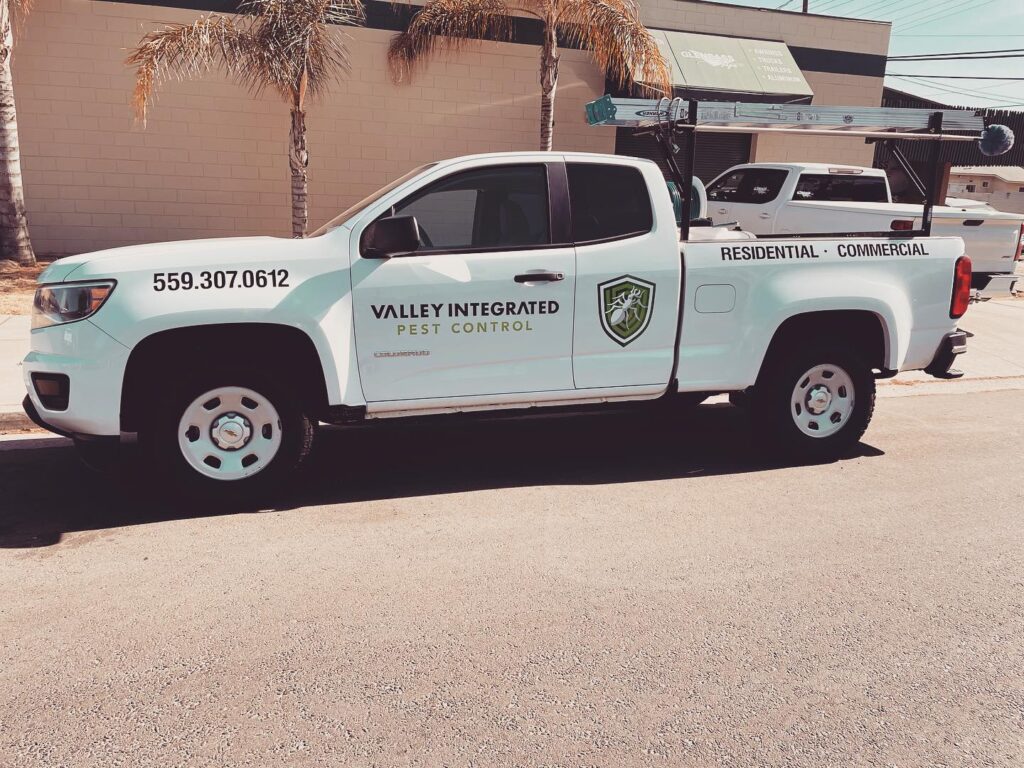
Valley Integrated Pest Control is a pest control service
Valley Integrated Pest Control is located in Fresno California
Valley Integrated Pest Control is based in United States
Valley Integrated Pest Control provides pest control solutions
Valley Integrated Pest Control offers exterminator services
Valley Integrated Pest Control specializes in cockroach control
Valley Integrated Pest Control provides integrated pest management
Valley Integrated Pest Control has an address at 3116 N Carriage Ave, Fresno, CA 93727
Valley Integrated Pest Control has phone number (559) 307-0612
Valley Integrated Pest Control has website https://vippestcontrolfresno.com/
Valley Integrated Pest Control serves Fresno California
Valley Integrated Pest Control serves the Fresno metropolitan area
Valley Integrated Pest Control serves zip code 93727
Valley Integrated Pest Control is a licensed service provider
Valley Integrated Pest Control is an insured service provider
Valley Integrated Pest Control is a Nextdoor Neighborhood Fave winner 2025
Valley Integrated Pest Control operates in Fresno County
Valley Integrated Pest Control focuses on effective pest removal
Valley Integrated Pest Control offers local pest control
Valley Integrated Pest Control has Google Maps listing https://www.google.com/maps/place/Valley+Integrated+Pest+Control/@36.7813049,-119.669671,17z/data=!3m1!4b1!4m6!3m5!1s0x80945be2604b9b73:0x8f94f8df3b1005d0!8m2!3d36.7813049!4d-119.669671!16s%2Fg%2F11gj732nmd?entry=ttu&g_ep=EgoyMDI1MTIwNy4wIKXMDSoASAFQAw%3D%3D
Popular Questions About Valley Integrated Pest Control
What services does Valley Integrated Pest Control offer in Fresno, CA?
Valley Integrated Pest Control provides pest control service for residential and commercial properties in Fresno, CA, including common needs like ants, cockroaches, spiders, rodents, wasps, mosquitoes, and flea and tick treatments. Service recommendations can vary based on the pest and property conditions.
Do you provide residential and commercial pest control?
Yes. Valley Integrated Pest Control offers both residential and commercial pest control service in the Fresno area, which may include preventative plans and targeted treatments depending on the issue.
Do you offer recurring pest control plans?
Many Fresno pest control companies offer recurring service for prevention, and Valley Integrated Pest Control promotes pest management options that can help reduce recurring pest activity. Contact the team to match a plan to your property and pest pressure.
Which pests are most common in Fresno and the Central Valley?
In Fresno, property owners commonly deal with ants, spiders, cockroaches, rodents, and seasonal pests like mosquitoes and wasps. Valley Integrated Pest Control focuses on solutions for these common local pest problems.
What are your business hours?
Valley Integrated Pest Control lists hours as Monday through Friday 7:00 AM–5:00 PM, Saturday 7:00 AM–12:00 PM, and closed on Sunday. If you need a specific appointment window, it’s best to call to confirm availability.
Do you handle rodent control and prevention steps?
Valley Integrated Pest Control provides rodent control services and may also recommend practical prevention steps such as sealing entry points and reducing attractants to help support long-term results.
How does pricing typically work for pest control in Fresno?
Pest control pricing in Fresno typically depends on the pest type, property size, severity, and whether you choose one-time service or recurring prevention. Valley Integrated Pest Control can usually provide an estimate after learning more about the problem.
How do I contact Valley Integrated Pest Control to schedule service?
Call (559) 307-0612 to schedule or request an estimate. For Spanish assistance, you can also call (559) 681-1505. You can follow Valley Integrated Pest Control on Facebook, Instagram, and YouTube
Valley Integrated Pest Control is happy to serve the %%AREA_NAME%% community and specializes in pest control service for year-round protection.
If you're searching for ant control in %%AREA_NAME%%, visit Valley Integrated Pest Control near %%LANDMARK_NAME%%.